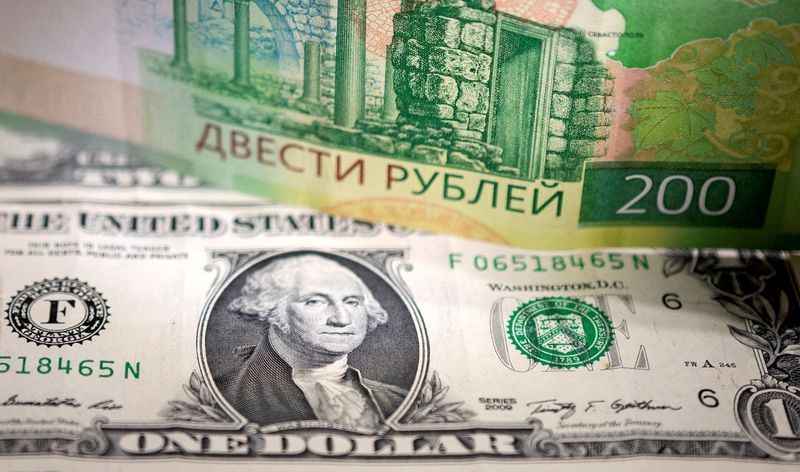














INTERNATIONAL: The Russian rouble steadied near 104 to the dollar on Monday and OFZ treasury bonds returned to trading, albeit in a volatile fashion, while investors kept an eye on Russia's ability to service state debt and pay the coupon on its Eurobond.
The rouble gained 0.8% to 104 against the dollar in Moscow trade and added 0.1% to finish the day at 114.64 versus the euro.
The market was focusing on clues about Russia's state finances as the country looks to gradually resume operations on its financial markets.
On Monday, Russia was expected to pay a $65.6 million coupon to holders of its 2029 Eurobond but the finance ministry has the right to pay creditors in roubles if they had asked to receive their interest in the Russian currency.
Yields on the 2029 paper, which move inversely with their prices, stood at 43% compared with 4.5% seen a month ago before Russia started what it calls a "special operation" in Ukraine.
Despite mounting concerns about Russia's ability to service debt, it paid coupons on two Eurobonds in dollars last week, meaning it has averted what would have been its first external bond default in a century.
OFZ TRADING RESUMES
The central bank said it would begin buying OFZ bonds when the Moscow Exchange resumed trading those papers on Monday, hoping to limit volatility, as it also held its key interest rate at 20% last week after an emergency rate hike in late February.
Prices on some rouble-denominated OFZ bonds tumbled by a third in pre-market trade before trading on the main session resumed at 1000 GMT and the overall trading volume totaled 13.8 billion roubles ($128.67 million), Moscow Exchange data showed.
The central bank did not disclose the amount of OFZ bonds it bought but the cumulative bid for just three OFZ series exceeded 240 billion roubles, meaning the central bank might have saved papers from falling further, market players said.
The central bank put bids for some of the OFZ series of 80 billion roubles to 120 billion roubles ($0.77-1.15 billion), asset managers at Locko Invest firm said in a note.
"That's a lot," they said.
The yield on Russia's benchmark 10-year OFZ bonds, rose to a record 19.74% in pre-market trading, before settling near 14.1% by the end of the main trading session, Refinitiv Eikon data showed.
The central bank's intervention on the market should provide extra liquidity to the banking system and help the bond curve adjust to the new environment, SOVA Capital said in a note, with short-term rates remaining close but above the current key rate of 20% and the curve is inverted.
Russian banks will be the main players on the OFZ market while non-residents will seek to exit the market to the extent possible as the papers, which foreign investors used to like thanks to appealing yields, were excluded from global indexes, VTB Capital said.
For now, sales of OFZ bonds by non-residents, who owned 19.1% of all such bonds as of early February, will not be authorized between March 21 and April 1, Moscow Exchange said on Monday.
Those investors will be able to conduct repo and derivative transactions and, when stock market trading resumes, buy securities to close their short positions, but not sell previously purchased securities, the bourse said.
Stocks and bonds last traded on the Moscow Exchange on Feb. 25. The central bank subsequently curbed trading as Western sanctions over events in Ukraine threw markets into turmoil.
The bank has yet to say when trading in instruments like stocks can resume, as it looks for ways to clear a backlog of transactions while avoiding a market collapse. But a limited number of financial market operations have been permitted to resume over the next two weeks.
Later on Monday, Russia's lower house of parliament was due to discuss the nomination of Central Bank Governor Elvira Nabiullina for another term by President Vladimir Putin.